

Introduction
In Malaysia’s rapidly advancing manufacturing and metal fabrication sectors, achieving precision and consistency is non-negotiable. Whether you operate a large-scale fabrication shop, an automotive assembly plant, or an engineering workshop, the demand for highly accurate, clean, and reliable welds is universal. TIG (Tungsten Inert Gas) welding—also known as Gas Tungsten Arc Welding (GTAW)—has become synonymous with high-precision metal joining. But why are TIG welders considered essential in Malaysia’s fabrication landscape? This article explores industry perspectives, practical examples, and actionable advice for professionals considering the best welding technology for demanding applications.
The Role of TIG Welding in Malaysian Industry
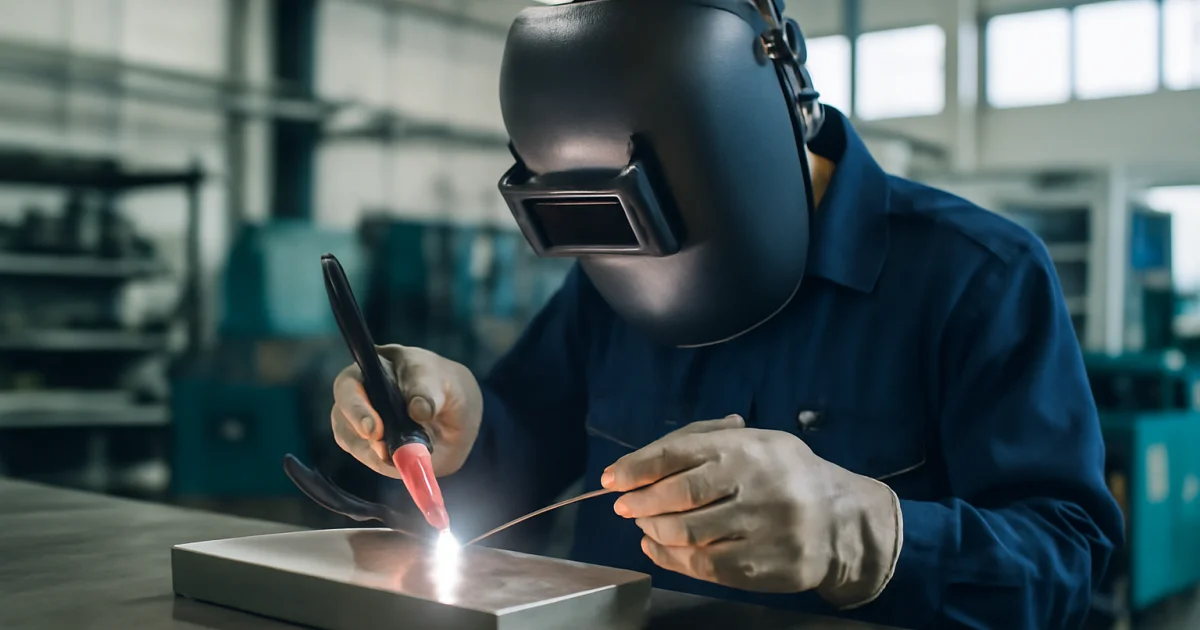
Malaysia’s industrial growth is underpinned by sectors such as automotive, construction, shipbuilding, and advanced manufacturing. All share a common requirement: the need for precise metal fabrication. TIG welding stands out because it delivers unmatched control over weld quality, bead appearance, and material compatibility. Unlike other methods, TIG welding uses a non-consumable tungsten electrode and inert shielding gas, producing clean, spatter-free welds ideal for thin metals, stainless steel, aluminium, and exotic alloys.
From high-end architectural features to intricate automotive components, TIG welders are relied upon wherever visual perfection and structural integrity are vital. In fact, many Malaysian manufacturers have made TIG welding a standard for critical joints, especially when post-weld finishing and minimal distortion are priorities.
Expert Perspectives: Why TIG Welders Are Indispensable
Fabrication experts across Malaysia consistently point to three main reasons TIG welding is irreplaceable:
- Precision and Versatility: TIG welders offer fine control over heat input and weld puddle, allowing operators to join thin sections without burn-through or warping.
- Superior Weld Quality: The process creates aesthetically pleasing, high-strength welds with little to no spatter—critical for visible joints or products demanding rigorous inspections.
- Material Flexibility: TIG can be used on a wide range of metals, including stainless steel, aluminium, copper, titanium, and special alloys often used in Malaysia’s advanced manufacturing.
Industry professionals frequently note that, while TIG welding is slower and may require more skill, it’s the preferred option for high-specification projects where quality cannot be compromised.
Insights from Malaysian Welding Specialists
Interviews with welding engineers at leading Malaysian manufacturing firms reveal that TIG welding is often the only method trusted for jobs involving custom stainless steel fabrication, aerospace components, and food-grade equipment. For example, a senior welder at a Penang-based electronics enclosure manufacturer stated, “We rely on TIG for every visible seam or customer-facing component. It’s the only way to guarantee a flawless finish and the exact tolerances demanded by our clients.”
Additionally, industry trainers have highlighted how TIG skills are in high demand, with technical institutes in Malaysia expanding their TIG certification programs. This trend is expected to continue as more businesses aim to meet international quality standards and attract global clients who insist on advanced fabrication capabilities.
Practical Applications: Where TIG Welding Excels
Let’s examine some real-world Malaysian industry scenarios where TIG welding is the method of choice:
- Automotive Manufacturing: TIG welders are employed to assemble exhaust systems, chassis components, and fuel tanks where leak-free, corrosion-resistant joints are critical.
- Food & Medical Equipment: Stainless steel tanks, piping, and frames for hygienic environments depend on TIG’s clean, contamination-free welds.
- Precision Machinery: In machinery and equipment manufacturing, TIG welding enables the joining of intricate parts and complex assemblies with minimal post-weld finishing.
- Architectural Metalwork: Decorative facades, railings, and features benefit from the smooth, attractive welds that only TIG can deliver consistently.
- Shipbuilding & Heavy Industries: Though MIG and arc welding dominate heavy fabrication, TIG is often specified for critical repairs, pipework, or sections demanding leak-proof integrity.
Emerging Sectors and Expanding Use Cases
As Malaysia accelerates investment in renewable energy and infrastructure, TIG welding is making inroads into solar panel mounting systems, wind turbine components, and energy storage enclosures. The electronics sector, too, increasingly specifies TIG for heat sinks, chassis, and EMI/RFI shielding, where ultra-clean, precision welds avoid contamination and ensure product reliability.
Many small and midsize enterprises (SMEs) are also expanding their fabrication services to target export markets. These businesses have found that investing in TIG welding capabilities opens new opportunities to serve international clients that demand rigorous quality control and documentation, especially in sectors like medical device manufacturing and laboratory equipment supply.
Comparing TIG Welding to Other Methods
Malaysian workshops often deploy a range of welding technologies, including MIG, arc, plasma, and resistance welding. Each has its strengths, but TIG remains unmatched for precision work. Here’s a concise comparison:
| Welding Method | Best For | Limitations |
|---|---|---|
| TIG (GTAW) | Thin metals, clean welds, aesthetic joints | Slower, higher skill required |
| MIG (GMAW) | High-speed production, thicker materials | More spatter, less control |
| Arc (SMAW) | Outdoor/structural jobs, quick setup | Slag removal, less neat finish |
| Plasma | Cutting, specialised welding | Expensive, niche use |
| Resistance | Spot, seam, stud welding | Limited to overlapping joints |
Case Example: MIG vs. TIG in Stainless Steel Fabrication
Consider a stainless steel furniture manufacturer in Kuala Lumpur. Initially, they used MIG welding for both visible and structural joints, but customer complaints about spatter and discoloration prompted a shift. After adopting TIG for all visible seams, the company achieved a cleaner finish, reduced polishing time, and won a contract to supply high-end fixtures to a luxury hotel chain. This illustrates how the right welding technology can directly impact a business’s market position and client satisfaction.
How TIG Welders Support Automation and Advanced Manufacturing
With Malaysia’s industry shifting towards automation and high-tech processes, TIG welders are increasingly integrated into robotic and automated welding systems. Automated TIG welding delivers consistent, repeatable results with minimal human intervention—ideal for mass production of precision components. This is particularly valuable where weld bead uniformity is required across hundreds or thousands of parts.
Companies investing in robot welding or looking to modernise their workshops find that TIG technology scales well, supporting both manual craftsmanship and advanced manufacturing lines. Leading Malaysian welding suppliers, such as ASB Welding, offer solutions that bridge manual TIG welding, semi-automated systems, and fully robotic TIG cells, allowing businesses to grow their capabilities as needed.
Integrating TIG Welding into Digital Manufacturing
The move toward Industry 4.0 in Malaysia has increased the demand for digital monitoring and traceability in fabrication processes. Modern TIG welders often include features such as programmable parameters, real-time quality monitoring, and integration with MES (Manufacturing Execution Systems). This allows production managers to track weld quality, operator performance, and maintenance needs remotely—enabling predictive maintenance and minimising downtime.
For example, an electronics assembly plant in Johor Bahru implemented a networked TIG welding setup. This allowed quality assurance teams to review weld data in real time, quickly identify deviations, and maintain compliance with strict export regulations—an advantage that manual tracking simply could not match.
Choosing the Right TIG Welder for Your Malaysian Workshop
Not all TIG welders are created equal. When selecting a TIG machine for your fabrication shop or factory, consider these factors:
- Material Types and Thicknesses: Ensure the welder can handle the range of metals and thicknesses you commonly work with.
- Power Output and Duty Cycle: For industrial or continuous use, choose machines with robust power supplies and high duty cycles.
- AC/DC Capability: If you weld both aluminium and steel, an AC/DC TIG welder is essential.
- Automation Compatibility: If you plan to scale into automation, look for models that integrate with robotic systems or automated welding setups.
- Service, Support, and Consumables: Partner with a supplier who offers strong technical support, ready access to electrodes, torches, and spare parts, as well as after-sales service across Malaysia.
Checklist for Evaluating TIG Welders
- Is the machine certified to international or Malaysian industry standards?
- Does it support pulsed TIG welding for ultra-thin materials?
- Are controls intuitive and operator-friendly?
- Is there a local service centre for rapid repairs?
- What are the warranty terms and availability of rental units if a machine goes down?
ASB Welding, for example, offers not just a range of TIG welders but also supports customers with technical advice, spare part availability, equipment rental, and maintenance—ensuring minimal downtime for Malaysian manufacturers.
Industry Challenges and Solutions in TIG Welding
Despite its advantages, TIG welding comes with challenges. Skilled operators are in high demand, and the process can be slower than alternatives, impacting throughput in high-volume environments. Many Malaysian businesses address these issues by:
- Investing in Operator Training: Well-trained welders maximise TIG’s benefits, improving speed and consistency.
- Leveraging Automation: Automated TIG solutions reduce reliance on manual skill and boost productivity.
- Optimising Workflow: Integrating TIG welding with plasma cutting, resistance welding, and post-weld cleaning technologies streamlines production and improves end results.
Common Mistakes and How to Avoid Them
- Undervaluing operator skill—always budget for training and practice time.
- Ignoring power supply compatibility—ensure proper electrical infrastructure for high-output TIG machines.
- Overlooking ventilation—TIG welding is clean, but proper fume extraction is still necessary, especially in confined spaces.
- Failing to match the torch and consumables to the application, which can lead to overheating or premature wear.
Working with an experienced supplier like ASB Welding helps companies identify the right blend of manual and automated solutions, tailored to their specific production goals.
Case Study: TIG Welding in Malaysian Automotive Parts Manufacturing
Consider a Malaysian automotive parts manufacturer producing stainless steel exhaust systems for export. Originally relying on MIG welding, the company faced frequent rework due to spatter and inconsistent bead profiles. After switching to TIG welders—sourced from a local welding shop with strong technical support—they saw a significant drop in defects, improved weld appearance, and easier compliance with overseas quality standards.
The switch required moderate investment in new machines, operator training, and workflow adjustment. However, the long-term benefits included higher customer satisfaction, reduced waste, and a stronger reputation for quality. This example shows how the right TIG welder Malaysia solution can directly impact competitiveness and growth.
Additional Use Case: Medical Equipment Fabrication
A medical device manufacturer in Selangor required ultra-clean welds for stainless steel frames and vessels. After adopting automated TIG welding, the company was able to meet strict hygiene standards set by international clients, reduce post-weld cleaning times by 30%, and expand their reach into the medical export market. Their experience demonstrates that TIG not only improves weld quality but can also streamline production and open new business opportunities.
Actionable Advice for Malaysian Fabricators
- Assess Your Needs: Carefully evaluate your product requirements, material types, and production volumes before choosing a TIG welder.
- Prioritise Support: Partner with suppliers who not only sell machines but also provide training, maintenance, and automation advice.
- Stay Current: Keep abreast of new TIG welding technologies, consumables, and automation trends to future-proof your business.
- Integrate Workflow: Combine TIG with complementary welding and finishing processes, such as plasma cutting, resistance welding, and weld cleaning, for maximum efficiency.
Planning for Growth and Compliance
Successful Malaysian manufacturers implement continuous improvement cycles. They routinely review weld quality, customer feedback, and production metrics to refine processes and upgrade equipment as needed. Consider scheduling quarterly reviews with your supplier and welding team to track performance and identify new opportunities for automation or skill development.
Malaysian manufacturers who actively invest in the right technology and support network consistently outperform competitors in quality and reliability.
Conclusion: The Future of TIG Welding in Malaysia
As Malaysia’s fabrication and manufacturing sectors pursue higher precision, cleaner welds, and global competitiveness, TIG welding will remain a core technology. Its blend of control, versatility, and superior results makes it indispensable for businesses seeking to meet demanding standards in automotive, construction, engineering, and more.
Choosing the appropriate TIG welder, aligning with a dependable supplier, and integrating automation where possible will empower Malaysian companies to lead in both local and international markets. For many, the journey to world-class fabrication begins with a single, well-selected TIG welding solution.
Frequently Asked Questions
What is TIG welding and why is it preferred for precision fabrication?
TIG welding (Tungsten Inert Gas welding) uses a non-consumable tungsten electrode and inert gas to produce clean, high-quality welds. It is preferred for precision fabrication because it allows for fine control of heat and weld puddle, resulting in visually appealing, strong, and spatter-free joints—especially important for thin metals and projects where aesthetics and accuracy are essential.
How does TIG welding compare to other welding methods in Malaysia?
TIG welding offers superior control and cleaner welds compared to MIG, arc, or resistance welding. While it may be slower and require more skill, it is ideal for projects needing high precision, minimal distortion, and excellent appearance. Other methods, like MIG, are faster and suited for thicker materials or mass production, but they typically produce more spatter and offer less control over weld quality.
What industries in Malaysia benefit most from TIG welders?
Key Malaysian industries benefiting from TIG welders include automotive manufacturing (for exhausts, fuel tanks, and chassis), food and medical equipment production (for hygienic stainless steel fabrication), precision machinery assembly, architectural metalwork, and sectors requiring leak-proof, visually perfect welds. TIG is also used in shipbuilding and heavy industries for specialist tasks.
What features should I look for when choosing a TIG welder for my workshop?
Consider the range of metals and thicknesses you’ll weld, the power output and duty cycle required for your workload, whether AC/DC capability is needed (for both aluminium and steel), and compatibility with automation if you plan to scale up. Also, ensure your supplier offers strong after-sales service, technical support, and access to consumables and spare parts.
How can Malaysian businesses address the skill and speed challenges of TIG welding?
Invest in operator training to enhance welding speed and consistency, and consider integrating automated or robotic TIG welding systems to boost productivity. Working with experienced suppliers can help optimise workflow, ensuring the right mix of manual and automated processes for your production goals.
Elevate Your Fabrication Quality with ASB Welding
Ready to take your precision fabrication to the next level? ASB Welding offers a comprehensive range of TIG welders, automation systems, consumables, and technical support designed for Malaysian industry. Whether you need new equipment, expert consultation, or ongoing maintenance, our experienced team is here to help you achieve flawless results and maximise efficiency.