
Plasma cutting machines have become an essential asset for fabricators, manufacturing shops, and industrial workshops across Malaysia. Their ability to deliver clean, precise cuts on a wide range of metals has transformed modern fabrication, reducing manual effort and enhancing productivity. Whether you are new to plasma cutting or seeking to sharpen your operational skills, this comprehensive guide will walk you through the crucial steps to safely and efficiently operate plasma cutting machines in Malaysia’s demanding industrial environment.
Understanding Plasma Cutting Machines: The Basics
Plasma cutting is a process that uses a high-velocity jet of ionized gas (plasma) to melt and sever electrically conductive materials such as steel, stainless steel, aluminum, brass, and copper. The plasma arc is created by sending an electric current through a gas (usually compressed air, nitrogen, or argon) passing through a constricted opening in the cutting torch. This intense heat, often exceeding 20,000°C, efficiently slices through metal with remarkable speed and accuracy.
There are several types of plasma cutting machines in Malaysia, ranging from manual handheld units for light fabrication work to advanced CNC (Computer Numerical Control) plasma cutters for automated, high-volume production. Key components typically include the power supply, plasma torch, ground clamp, air compressor, and consumables such as electrodes and nozzles.
Step 1: Preparing Your Workspace for Plasma Cutting
Before powering up your plasma cutter, it’s critical to establish a safe and organized workspace. Here are the essential preparatory steps:
- Ventilation: Ensure your workshop is well-ventilated to dissipate fumes and airborne particulates generated during cutting.
- Clear the Area: Remove any flammable materials (cloth, paper, solvents) from the vicinity. Plasma cutting produces sparks and hot slag that can ignite combustibles.
- Stable Work Surface: Set up a sturdy, grounded metal table or cutting bench to support your workpiece securely.
- Fire Safety: Keep a fire extinguisher rated for electrical and metal fires within easy reach.
- Proper Lighting: Use bright, focused lighting to clearly see your cutting path and markings.
Additional Tip: For workshops in Malaysia, where humidity can be high, consider using dehumidifiers or moisture-absorbing mats to minimize rust on both your workpieces and your machines. Regularly sweep the area to prevent dust buildup, which can affect machine airflow and safety.
Step 2: Setting Up the Plasma Cutting Machine
Proper setup is fundamental to both safety and cutting quality. Follow these practical steps for most industrial plasma cutting machines Malaysia fabricators use:
- Connect the Power Supply: Ensure the machine is rated for Malaysia’s electrical standards (typically 220V or 415V). Plug into a dedicated, grounded outlet.
- Attach the Ground Clamp: Secure the ground clamp directly to the workpiece or metal table to complete the electrical circuit.
- Connect the Air Compressor: Attach the air supply hose to the machine’s inlet. Check for leaks and confirm that the compressor delivers adequate pressure (often between 4.5 – 6.0 bar or as specified by the manufacturer).
- Install Consumables: Inspect the torch and fit new electrodes, nozzles, and shields if they show signs of wear or damage. Proper consumable condition is vital for clean cuts.
- Adjust Settings: Set the amperage and air pressure based on the thickness and type of metal you’re cutting. Refer to your machine’s manual or quick-reference charts.
Common Mistake to Avoid: Never skip the consumable inspection step before starting a job. Worn consumables are a leading cause of rough cuts and torch failure, leading to costly downtime.
Step 3: Personal Protection and Safety Precautions
Safety is paramount in plasma cutting due to the presence of high temperatures, UV radiation, noise, and flying metal particles. Before operating, ensure that you and those nearby are equipped with:
- Welding Helmet or Face Shield: Use a helmet with a suitable shade lens (usually shade 5-8 for plasma cutting) to protect eyes from arc glare and UV radiation.
- Protective Clothing: Wear flame-resistant jackets, gloves, and long pants. Avoid synthetics that can melt onto your skin.
- Hearing Protection: Plasma cutting can be loud, especially in enclosed workshops. Earplugs or earmuffs are recommended.
- Respiratory Protection: Use a respirator or fume extraction system if cutting coated or galvanized metals to avoid inhaling hazardous fumes.
- Safety Footwear: Wear steel-toed boots with non-slip soles.
Always double-check that the machine is switched off before changing consumables or making adjustments. Never bypass safety interlocks or operate the machine with damaged cables or hoses.
Checklist Before Starting:
- Inspect all cables and hoses for wear or damage.
- Verify that fire extinguishers are charged and accessible.
- Ensure you have the correct PPE for the materials and machine used.
- Communicate with other workers in the area about your cutting schedule.
Step 4: Operating the Plasma Cutting Machine – A Practical Walkthrough
With your workspace ready and protective gear on, follow these steps to execute a precise plasma cut:
- Mark the Cut Line: Use a metal scribe, chalk, or marker to clearly define your desired cut path on the workpiece.
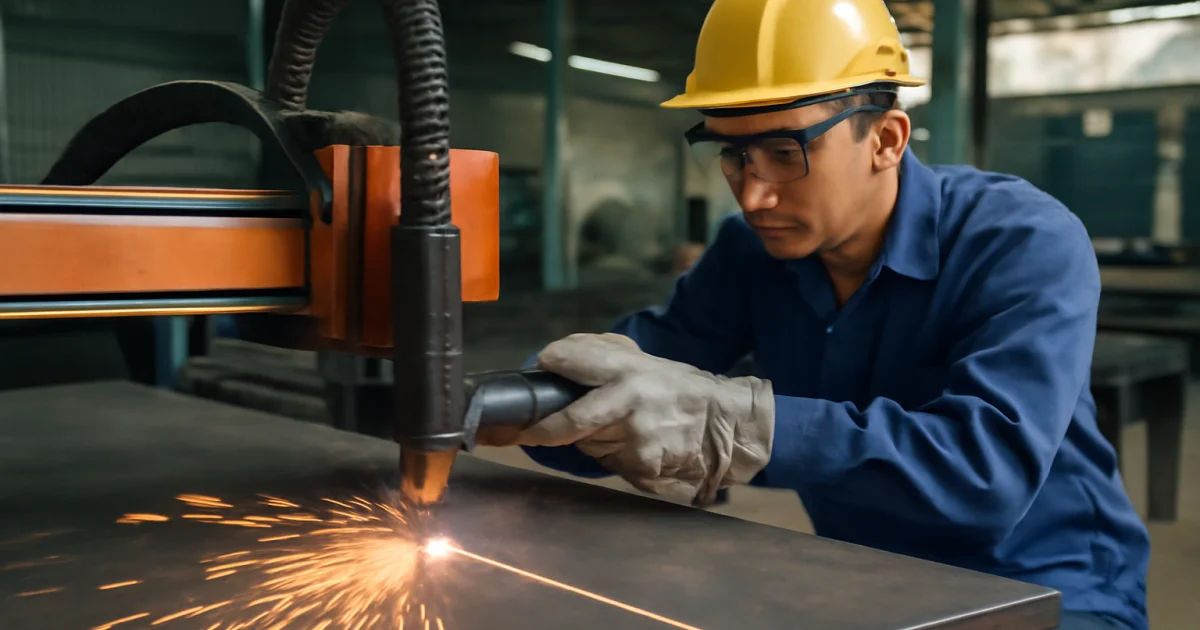
- Position the Torch: Hold the torch perpendicular to the metal, with the nozzle hovering just above the surface. For thinner sheets, you can drag the nozzle along the metal; for thicker materials, maintain a short stand-off distance (about 2-3 mm).
- Initiate the Arc: Depress the trigger or button to start the plasma arc. Most modern machines have a pilot arc feature, making it easier to start without direct contact.
- Begin Cutting: Move the torch smoothly and steadily along the marked line at a consistent speed. Too fast and you risk incomplete cuts; too slow and you may create excessive slag or warping.
- Observe the Kerf and Sparks: The cutting arc should pass cleanly through the metal, with sparks and molten metal streaming from the underside. If sparks spray upward or the cut is rough, adjust your speed, torch angle, or machine settings.
- Complete the Cut: Release the trigger at the end of the cut and allow the arc to extinguish fully before moving the torch away.
Practical Example: Cutting a 10mm mild steel plate for a structural bracket. Set the machine to 60A, air pressure to 5.5 bar, and fit a new nozzle. Mark the shape using chalk, clamp the workpiece securely, and cut at a steady pace, letting the sparks flow freely beneath for a smooth edge.
Additional Practical Example: If you’re working on aluminum sheets for an automotive project, reduce the amperage to prevent excessive melting and use a slower torch speed for the best finish. Always check the machine’s recommended settings chart for the specific alloy and thickness.
Step 5: Post-Cutting Procedures and Finishing
Once your cut is complete, there are several important finishing tasks to ensure safety and a professional result:
- Inspect the Edge: Check the quality of the cut for dross (slag), roughness, or incomplete sections. A clean cut will require minimal secondary processing.
- Remove Slag: Use a chipping hammer, wire brush, or grinder to clean away any residual slag or burrs from the edges.
- Cool Down: Allow the workpiece and torch to cool before handling or making further adjustments.
- Store Equipment: Shut off the power, disconnect the air supply, and coil cables neatly. Replace consumables as needed for the next use.
Finishing Tip: For jobs requiring painted or powder-coated finishes, ensure all edges are smoothed and degreased after cutting. This helps coatings adhere and prevents corrosion, especially in Malaysia’s humid environment.
Troubleshooting Common Plasma Cutting Issues
Even experienced fabricators encounter operational hiccups. Here are common problems and their practical solutions:
- Poor Cut Quality (Ragged Edge, Excessive Dross): Check for worn consumables, incorrect air pressure, or too fast/slow cutting speed.
- Failure to Start Arc: Inspect the ground clamp connection, air supply pressure, and torch consumables for proper installation.
- Frequent Consumable Burnout: Ensure you are using the correct amperage setting and avoid prolonged pilot arc operation without cutting.
- Machine Overheating: Allow the unit to cool periodically during extended use, and keep air inlets clear of dust and debris.
For persistent problems, consult the manufacturer’s manual or contact a qualified welding equipment service provider like ASB Welding for expert troubleshooting and technical support.
Pro Tip: Maintain a troubleshooting log for your machines. Recording issues and solutions helps diagnose recurring faults faster and streamlines communication with service providers.
Plasma Cutting Safety Best Practices for Malaysian Workshops
Malaysia’s tropical climate, busy industrial settings, and diverse metalworking applications require attention to several localized safety best practices:
- Humidity Awareness: Avoid operating plasma cutters in damp or wet conditions to reduce the risk of electric shock. Use rubber mats and insulated footwear if needed.
- Electrical Standards: Ensure all equipment conforms to Malaysian electrical regulations and is regularly inspected by qualified personnel.
- Fire Prevention: In busy welding shops or “kedai welding,” maintain clear emergency access and practice regular fire drills.
- Consumables Management: Store and track your set of welding consumables to minimize downtime and ensure consistent performance.
Scenario Analysis: During the rainy season, workshops near coastal areas may face sudden power fluctuations or water ingress. Ensure your machines are stored above ground level, and consider surge protectors for sensitive equipment. Always have a backup plan if a scheduled job coincides with adverse weather conditions.
Integrating Plasma Cutting with Welding and Automation
Modern fabrication in Malaysia increasingly incorporates plasma cutting as part of a wider automated production line alongside MIG, TIG, or robot welding systems. For workshops seeking greater speed and consistency, CNC plasma tables and robotic arms can be used to automate repetitive cuts, boost productivity, and reduce manual errors.
When integrating plasma cutting with welding automation, consider:
- Machine compatibility and communication (e.g., CNC interface, robot controller support).
- Workpiece fixturing for accurate, repeated cuts.
- Process sequencing—cutting parts before welding for optimal fit and finish.
- Software updates and technical support for automation systems.
Case Study: A medium-sized manufacturing shop in Selangor added a CNC plasma cutting table to its workflow. By programming batch jobs and integrating the table with their MIG welding stations, the shop reduced manual layout time by 40% and achieved more consistent quality across production runs. They also trained their team to troubleshoot basic CNC errors, further reducing downtime.
ASB Welding supplies both manual and automated plasma cutting solutions, helping Malaysian manufacturers and workshops stay at the forefront of precision metalworking.
Conclusion: Key Takeaways for Malaysian Fabricators
Operating plasma cutting machines in Malaysia requires a combination of safety awareness, machine knowledge, and practical technique. By preparing your workspace, following step-by-step setup and operation, and applying regular maintenance, you can achieve clean, precise cuts on a variety of metals. Whether you’re running a large manufacturing line, a busy welding shop near me, or a small workshop, mastering these steps will help you unlock the full potential of plasma cutting machines Malaysia fabricators rely on for daily production.
Always prioritize safety, consult your machine’s manual, and seek expert advice when needed. For advanced plasma cutting solutions, automation, consumables, and technical service, connect with trusted local providers like ASB Welding to keep your metalworking business moving forward.
Frequently Asked Questions
What materials can I cut with a plasma cutting machine?
Plasma cutting machines can efficiently cut electrically conductive metals, including mild steel, stainless steel, aluminum, brass, and copper. The process is not suitable for non-conductive materials such as wood, plastics, or ceramics.
How do I choose the right plasma cutter for my workshop in Malaysia?
Consider the maximum metal thickness you need to cut, the duty cycle for your expected usage, the machine’s power requirements, and the availability of spare parts and technical support. For industrial needs, look for robust brands and suppliers like ASB Welding that offer both manual and automated plasma cutters.
What are the main safety risks when using a plasma cutting machine?
Key risks include electrical shock, fire hazards from sparks and hot slag, UV radiation exposure, inhalation of hazardous fumes, and noise. Always use appropriate PPE, ensure good ventilation, and keep your workspace free of flammable materials.
Why is my plasma cutter producing rough or incomplete cuts?
Common causes include worn or damaged torch consumables, incorrect air pressure, improper cutting speed, or a poor ground connection. Regularly inspect and replace consumables, confirm settings, and ensure stable machine operation.
Can plasma cutting be automated for higher production efficiency?
Yes, plasma cutting can be integrated with CNC tables or robotic systems to automate repetitive cuts, increase accuracy, and boost productivity. Many Malaysian manufacturers use automated plasma cutting solutions for mass production and precise fabrication.
Upgrade Your Workshop with Expert Plasma Cutting Solutions from ASB Welding
Ready to enhance your fabrication capabilities? ASB Welding is Malaysia’s trusted one-stop provider for plasma cutting machines, welding sets, consumables, automation systems, and technical support. Whether you require a manual plasma cutter for your shop or a fully automated solution for industrial production, our experienced team will help you select, install, and maintain the ideal equipment for your needs.
- Wide range of industry-leading plasma cutting and welding machines
- Comprehensive after-sales service and technical consultation
- Flexible options: new, used, and rental machines available
- Professional training and troubleshooting support
Contact ASB Welding today to empower your workshop with reliable, high-performance cutting and welding technology.