
Manufacturing in Malaysia is evolving rapidly, with automation and robotics leading the way. Among the most transformative technologies is the welding system robot system. These automated welding solutions are helping manufacturers boost efficiency, improve product quality, and stay competitive in a dynamic market. If you’re new to robotic welding or considering upgrading your production with automation, this comprehensive guide will walk you through everything you need to know about Welding System Robot System Malaysia.
Introduction to Robotic Welding Systems
Robotic welding systems use programmable robots to perform welding tasks automatically. Unlike manual welding, where skilled workers control every aspect, robot systems rely on pre-programmed instructions, sensors, and automation technology to join metal parts. This shift is especially significant for Malaysian manufacturers eager to meet high production demands, enhance safety, and ensure consistent results.
In Malaysia, robotic welding adoption is rapidly growing across industries such as automotive, metal fabrication, machinery manufacturing, and construction. Businesses are moving beyond traditional welding sets and embracing automation to address labor shortages, rising costs, and increasing customer expectations.
How Does a Welding System Robot System Work?
A typical welding robot system consists of several core components:
- Robot Arm: The programmable manipulator that holds and moves the welding torch.
- Controller: The computer that stores welding programs and coordinates the robot’s movements.
- Welding Power Source: Provides the required electrical energy for the welding process (MIG, TIG, arc, etc.).
- Wire Feeder or Electrode System: Feeds welding consumables to the torch as needed.
- Workpiece Positioner: Rotates or moves the parts being welded for optimal access.
- Safety Fencing and Sensors: Ensures safe operation by keeping personnel away from moving parts and welding arcs.
The robot is programmed to follow precise paths and welding parameters. Modern systems often include sensors for seam tracking, adaptive control, and quality monitoring. Once set up, the robot can repeat welding tasks with high accuracy and speed, reducing human error and variability.
Key Benefits of Robotic Welding for Malaysian Manufacturers
Switching to a robotic welding system offers tangible advantages for production operations in Malaysia:
- Higher Productivity: Robots can operate continuously, increasing output while reducing cycle times.
- Consistent Quality: Automated welding delivers uniform results, minimizing defects and rework.
- Improved Safety: Robots handle hazardous tasks, keeping workers away from fumes, heat, and electrical risks.
- Cost Savings: Over time, automation reduces labor costs, waste, and downtime.
- Flexible Manufacturing: Modern robots can be reprogrammed for different products, making it easier to adapt to changing market needs.
- Data and Monitoring: Advanced systems capture performance data, supporting continuous improvement and traceability.
For companies facing skilled welder shortages or aiming for export-grade quality, robot welding systems provide a practical, scalable solution.
Common Types of Welding Robots and Applications
The type of robot, welding process, and setup will depend on your products and production volume. Here are the most commonly used robotic welding solutions in Malaysia:
- Articulated Robots: Highly flexible arms with multiple joints, ideal for complex welding paths in automotive, machinery, and metal fabrication.
- SCARA Robots: Suited for high-speed, repetitive tasks on flat planes, such as spot welding small components.
- Gantry (Cartesian) Robots: Move along straight axes, used for large workpieces like shipbuilding or heavy equipment.
- Collaborative Robots (Cobots): Designed to work safely alongside humans, perfect for small-batch production or when flexibility is needed.
Popular robotic welding processes include:
- MIG/MAG Welding: Widely used for automotive parts, fabrication, and machinery assembly.
- TIG Welding: Preferred for thin materials or where high-quality, precise welds are required.
- Spot Welding: Essential in car body manufacturing and sheet metal joining.
- Plasma and Laser Welding: Used for advanced applications demanding accuracy and minimal heat distortion.
Malaysian factories are integrating these systems for car chassis, appliance frames, metal enclosures, furniture, structural beams, and more. The right robot setup can transform a welding shop into a high-tech production cell.
Key Steps When Implementing a Welding System Robot System
Adopting a robotic welding solution is a significant investment. Here’s a simplified step-by-step approach for manufacturers starting out:
- Assess Your Needs: Analyze your current welding processes, production volumes, product types, and bottlenecks. Identify where automation will yield the greatest benefits.
- Consult with Experts: Work with reputable suppliers like ASB Welding to explore available solutions, from robot arms to full automation cells. Expert guidance ensures you choose the right system for your factory.
- Evaluate Workspace and Infrastructure: Ensure your facility has enough space, suitable power supply, ventilation, and floor strength to support robotic systems.
- Choose the Right Equipment: Select the appropriate robot, welding machine, positioners, sensors, and safety gear for your application. Consider future scalability.
- Plan Integration: Integrate the robot system with existing production lines, conveyors, or quality control checkpoints as needed.
- Training and Support: Train operators, maintenance staff, and engineers on programming, operation, and troubleshooting. Ongoing technical support is vital.
- Trial Runs and Optimisation: Test the system with sample parts, adjust parameters, and refine workflows for optimal performance.
Transitioning from manual welding sets to automation can seem daunting, but with a structured approach and reliable partners, Malaysian manufacturers can implement robot systems with confidence.
Cost Factors and ROI Considerations
One of the most common questions is: How much does a robotic welding system cost? Prices vary widely, depending on factors like:
- Type and brand of robot and controller
- Welding process (MIG, TIG, spot, laser, etc.)
- Number of axes and payload capacity
- Integration complexity (standalone cell or full line automation)
- Sensors, vision systems, and safety equipment
- Custom fixtures, positioners, and conveyors
- Installation, training, and ongoing support
In Malaysia, a basic robot welding cell may start at several hundred thousand ringgit, while complex systems can go much higher. However, the return on investment is often realized within 1-3 years through labor savings, higher throughput, reduced rework, and improved quality.
To maximize ROI:
- Automate high-volume, repetitive welding tasks first
- Choose scalable solutions that support future expansion
- Regularly maintain equipment to minimize downtime
- Leverage technical support for troubleshooting and optimization
Engaging with suppliers that offer both new and rental options, such as ASB Welding, enables manufacturers to manage costs and mitigate risk during the transition to automation.
Practical Examples: Robotic Welding in Malaysian Industry
Let’s explore how different sectors in Malaysia are benefiting from welding system robot systems:
Automotive Manufacturing
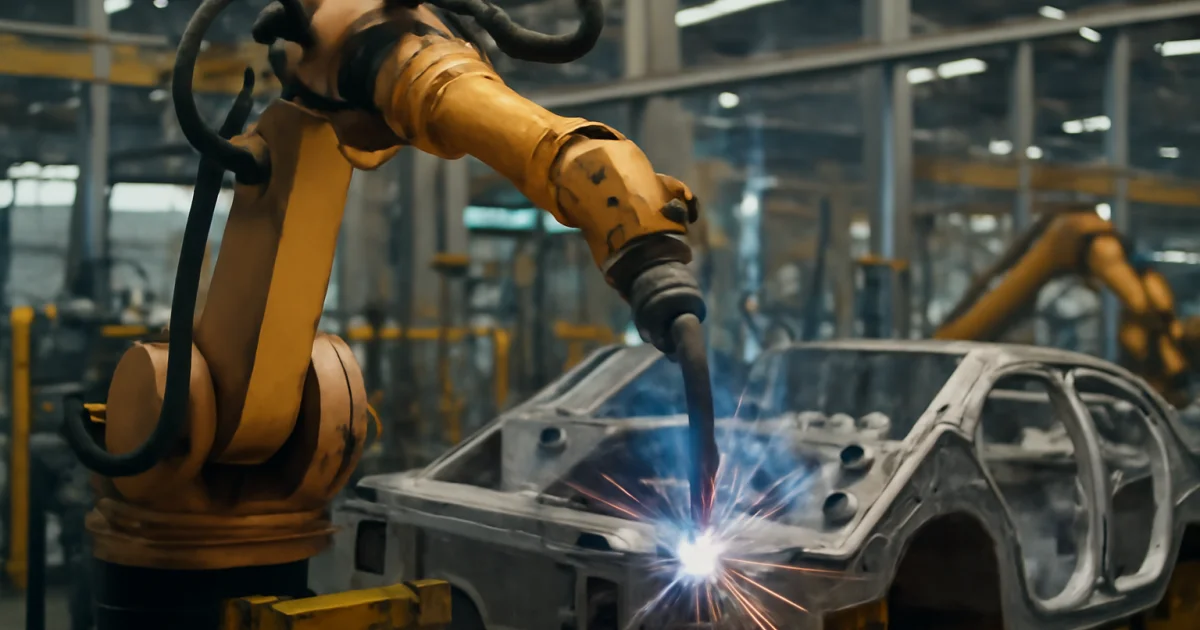
Automotive plants are among the earliest adopters of robot welding. Robots perform spot welding on car bodies, MIG welding on chassis frames, and complex assemblies with speed and repeatability. This results in safer vehicles and faster production lines.
Metal Fabrication Workshops
Fabricators use robotic systems for welding large metal structures, enclosures, and precision components. Automation allows them to handle bigger contracts and maintain consistent quality, even with limited skilled labor.
Construction and Engineering
In construction, robots weld structural beams and prefabricated assemblies, speeding up project timelines and improving structural integrity. Both large EPC companies and specialist workshops benefit from integrating automation.
Heavy Equipment and Shipbuilding
For heavy industries, robotic welding systems tackle oversized workpieces and thick plates, where manual welding would be time-consuming and physically demanding.
SME Manufacturers
Even small and medium-sized enterprises are adopting collaborative robots to automate repetitive welds on furniture, appliances, and custom parts. Cobots are easy to program and fit into smaller welding shops, bringing automation within reach for SMEs.
Challenges and Solutions in Robotic Welding Adoption
While the advantages are clear, manufacturers may face several challenges when implementing robotic welding:
- Initial Investment: Upfront costs can be high, but financing, leasing, or rental options help ease the burden.
- Skilled Workforce: Training is necessary for operators and maintenance staff. Partnering with experienced automation providers ensures knowledge transfer.
- System Integration: Integrating robots with existing production lines and IT systems may require customization and planning.
- Part Variability: Robots excel when workpieces are consistent. For highly variable products, vision systems or flexible fixturing may be needed.
- Maintenance: Regular preventive maintenance reduces unexpected downtime. Choose suppliers with strong after-sales support.
Companies like ASB Welding offer comprehensive technical service, troubleshooting, and maintenance to help Malaysian manufacturers overcome these obstacles and maintain peak performance.
How to Choose the Right Welding System Robot System in Malaysia
Selecting the best robotic welding setup involves more than picking a robot arm. Here are practical tips:
- Work with suppliers who understand local industry needs and have experience in your sector.
- Request demonstrations or site visits to see similar systems in action.
- Evaluate after-sales support, spare parts availability, and training programs.
- Consider scalability—can the system be expanded as your business grows?
- Factor in total cost of ownership, not just initial price.
- Ask about rental, trial, or buyback options to manage risk.
ASB Welding, with its extensive portfolio and technical expertise, helps manufacturers in Malaysia identify, install, and maintain the ideal Welding System Robot System Malaysia for their operations.
Getting Started: Actionable Steps for Malaysian Manufacturers
- Conduct an Automation Audit: Review your current welding operations and identify tasks suitable for automation.
- Engage with Experts: Contact a reputable supplier for a needs assessment and solution proposal.
- Plan Your Budget: Consider both immediate and long-term costs, including equipment, integration, and maintenance.
- Pilot a Project: Start with a pilot robot cell to validate benefits before scaling up.
- Invest in Training: Empower your team with the skills needed to operate and maintain new systems.
- Monitor and Improve: Use system data to track productivity, quality, and identify areas for further optimization.
By following these steps, Malaysian manufacturers can confidently transition to robotic welding, unlocking new levels of efficiency and competitiveness.
Conclusion: Embracing the Future of Welding in Malaysia
Robotic welding systems are transforming manufacturing across Malaysia, helping companies meet higher standards, manage labor shortages, and stay ahead in a global marketplace. By understanding the basics, weighing costs and benefits, and partnering with experienced providers like ASB Welding, manufacturers can successfully implement automation and position themselves for long-term growth.
Whether you are a large-scale automotive factory, a metal fabrication workshop, or an SME exploring your first robot, the journey to automation starts with the right knowledge and partners. Take the first step towards future-ready production with a Welding System Robot System Malaysia solution tailored to your business needs.
Frequently Asked Questions
What is a welding system robot system?
A welding system robot system is an automated setup that uses programmable robots to perform welding tasks. These systems are designed to join metal parts efficiently, consistently, and safely, reducing manual labor and improving product quality in manufacturing environments.
How much does a robot welding system cost in Malaysia?
The cost varies depending on the type of robot, welding process, level of automation, and integration complexity. Basic robot welding cells may start at several hundred thousand ringgit, while advanced or custom solutions can cost much more. Many suppliers in Malaysia offer financing, rental, or buyback options to make adoption more accessible.
Which industries in Malaysia benefit most from robotic welding?
Industries such as automotive manufacturing, metal fabrication, construction, shipbuilding, heavy equipment production, and SMEs benefit significantly from robotic welding. These sectors rely on high-volume, precise, and repetitive welding tasks that are ideal for automation.
Is it difficult to train staff to use welding robots?
Robotic welding systems require initial training for operators, maintenance staff, and engineers. However, modern systems are designed with user-friendly interfaces and programming tools. Many suppliers, including ASB Welding, provide comprehensive training and ongoing technical support to ensure staff competency.
What should I consider when choosing a welding system robot system in Malaysia?
Key considerations include your production needs, available workspace, budget, desired welding process, after-sales support, scalability, and supplier experience. It’s important to partner with a reputable company that offers technical expertise, demonstration opportunities, and flexible purchasing or rental options.
Upgrade Your Production with Robotic Welding Solutions from ASB Welding
Ready to take your manufacturing to the next level? ASB Welding offers a full spectrum of robotic welding systems, automation solutions, consumables, and expert support tailored for Malaysian manufacturers. Whether you need MIG, TIG, spot, or laser welding automation, our experienced team helps you plan, install, and maintain the right system for your business. Discover flexible options, including new and rental equipment, backed by comprehensive after-sales service. Start your automation journey with confidence—contact ASB Welding today.